Content under editorial responsibility

Guides and articles published under the ביטקוין.com editorial team byline follow the site’s editing process. This is an editorial credit, not a claim that an individual has professional qualifications or experience that have not been provided.

Sources and corrections

The editorial policy explains content-type distinctions and how corrections are handled. For enquiries about specific content, include a page link and a short explanation.

Editorial articles

News Crypto in Israel

Bank of Israel revises banks' crypto checks from May 2027

The Bank of Israel has amended Directive 411 to clarify that banks cannot refuse payment services solely because activity is connected with crypto, and to remove a mandatory check triggered by annual activity exceeding 100,000 NIS. Checks will instead depend on risk. Published on 7 October 2026, the amendment takes effect on 1 May 2027.

News Wallets and security

Binance pledges to cover hack losses; withdrawals paused

Binance says attackers stole approximately $6.3 billion from its hot wallets on 29 October 2026. The exchange has promised to absorb the loss, but the latest official update reviewed on 31 October still described crypto withdrawals as suspended for security checks. Deposits remained operational. A phased withdrawal restart was targeted around 1 November, subject to testing, rather than announced as complete.

News Regulation and tax

MEXC says it has no MiCA licence and is leaving the Netherlands: what happens to user accounts

In a guide published on 21 October 2026, MEXC states that it is not authorised under MiCA in the European Union or European Economic Area. It is also ending service for Netherlands-linked users. Its detailed exit notice gives 24 October 2026 as the start of restrictions for the final group, but the company’s guide shows a different schedule. Do not rely on a later date in a headline without checking the notice applicable to the account.

News Bitcoin basics

Bitcoin Core accelerates fixes and disclosure for vulnerabilities easily found with AI

Bitcoin Core developers updated their security vulnerability disclosure policy on 22 October 2026: when a vulnerability is classified as easy to discover, including through a simple AI model prompt, the project will promptly release a fix for every supported major version alongside a security advisory. The new route bypasses the usual waiting periods in these cases but does not remove them for other vulnerabilities.

News Wallets and security

Electrum 4.8.3 fixes flaw that let a malicious server disguise theft as a network fee increase

Electrum 4.8.3 installers were published on 24 October 2026 with a fix for a high-severity vulnerability: a malicious server could display a replacement transaction directing funds to an attacker and induce the user to sign it when requesting a higher network fee. The warning applies to earlier versions connected to an untrusted server, and the developers urge users to update.

News Regulation and tax

OCC issues final stablecoin rules: January start, with no blanket permission for rewards

The US Office of the Comptroller of the Currency, OCC, published final rules on 21 October 2026 implementing the GENIUS Act for payment stablecoins. The rules take effect on 18 January 2027 and apply to entities within its jurisdiction. They address reserves, redemption and supervision, among other matters. A change concerning rewards through third parties does not remove the prohibition on issuers paying interest or yield merely for holding the coin.

News Regulation and tax

South Korea advances plans to regulate stablecoins as payment instruments alongside separate reporting rules

South Korea’s government and central bank plan to prepare an amendment to the Foreign Exchange Transactions Act this year to regulate stablecoins as payment instruments. This emerges from a local report based on material presented to a parliamentary audit on 22 October 2026. It is a plan to prepare an amendment, not an announcement that the coins already have a new legal status. A separate framework for reporting cross-border digital asset transfers is also progressing.

News Wallets and security

CryptoBilis case: Ledger widens sales suspension after hardware implants found in wallets

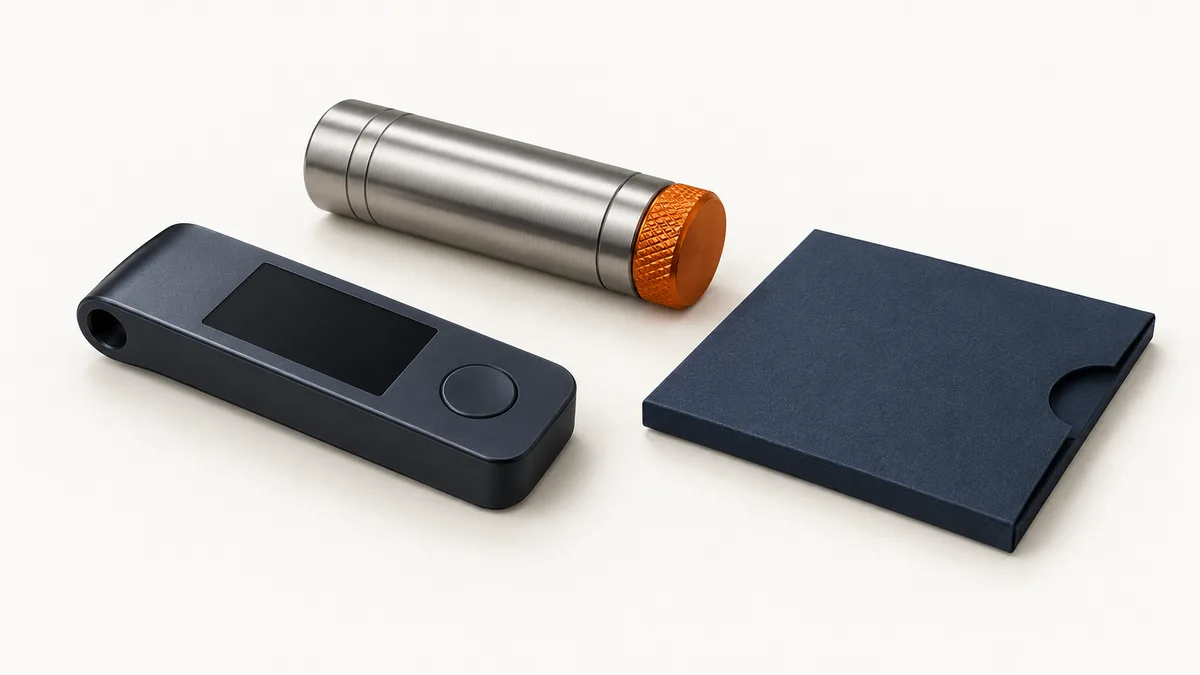
Ledger announced on 15 October 2026 that it had asked authorised resellers and distributors in Southeast Asia and Hong Kong to suspend sales following an attack involving components implanted in devices to capture seed phrases during setup. The update broadens the picture beyond the initial CryptoBilis reports. The company attributes the compromise to the distribution chain, not a breach of its systems, but that remains the manufacturer’s conclusion from its investigation.

News Regulation and tax

ESMA calls for an end to non-MiCA stablecoin services, with a January 2027 transition limit

The European Securities and Markets Authority, ESMA, published an opinion on 8 October 2026 stating that crypto service providers authorised under MiCA should end services involving non-compliant stablecoins for EU clients. It set a deadline to remedy gaps as soon as possible and within three months at most, meaning by 8 January 2027. This is not permission to continue ordinary trading until that date.

News Markets and data

Report: wallet attributed to the US government transfers 12,267 Bitfinex bitcoin, with no confirmed sale

On 8 October 2026, reports said a wallet Arkham linked to bitcoin seized in the Bitfinex hack case transferred about 12,267 coins to a new, unnamed address. Decrypt and CoinDesk reported the movement using the company’s data. The described record indicates a transfer, but does not prove that the government sold the coins, who now owns them or why they moved.

Guide Crypto in Israel

Crypto tax in Israel: when liability arises, what to record and how to approach reporting

Crypto tax in Israel does not depend solely on withdrawing shekels to a bank. Under the Israel Tax Authority’s position, bitcoin and digital assets of the kind discussed in Circular 5/2018 are assets, and selling, exchanging them for another coin or using them to pay may create a taxable event. For an individual whose activity is not a business, the ordinary tax rate on real capital gains is generally 25%, but that is not a maximum rate applicable to every case. Checked on 16 October 2026, this guide explains general rules, not personal tax advice.

Guide Bitcoin basics

Buying or receiving bitcoin for the first time: what to check before paying, entering an address and confirming

Before buying or receiving bitcoin, establish who will hold the keys, which asset you will receive and on which network, what the process will cost and how arrival will be checked. Start by identifying the service and preparing the wallet, proceed with a limited test transfer, and only then consider another action. This guide aims to reduce operational mistakes, not recommend an investment: even correct execution does not prevent loss of value, fraud or provider failure.