

Explainer Bitcoin basics Mining and networksBlockchain and technology
PQLN: what post-quantum research offers Lightning, and what lies outside its scope
The research examines protection for communications and messages on the Lightning Network. It does not replace protection for the Bitcoin transactions holding channel funds.
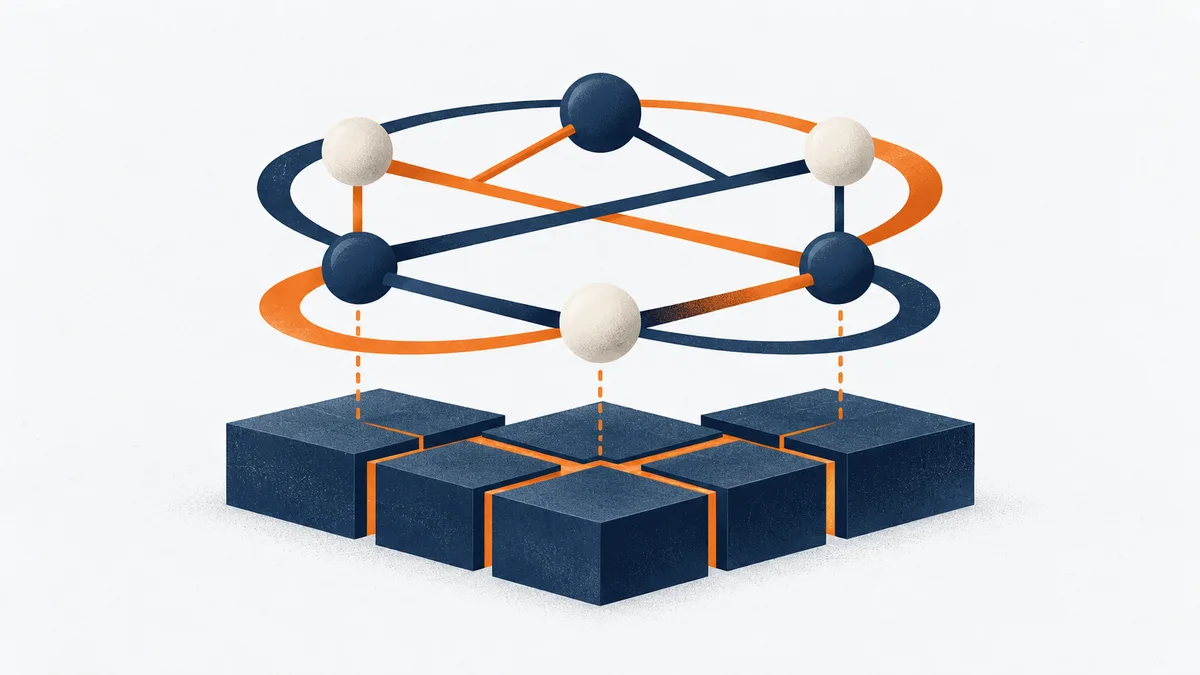
The PQLN study, published on arXiv on 12 September 2026, proposes a hybrid extension to Lightning using ML-DSA and ML-KEM alongside existing mechanisms. The authors describe an implementation in rust-lightning and experiments with nodes. This is a research preprint; its publication alone does not mean the proposal has been adopted as a standard or the entire network upgraded. The paper (Opens in a new tab)
Which part of the system is it trying to protect?
The research focuses on information passing outside the blockchain: network announcements, connections between nodes, invoices, payment offers and routing. The concern is that an attacker could record traffic today and try to decrypt it in the future using a sufficiently capable quantum computer. The paper does not specify when that capability will become available. The paper (Opens in a new tab)
For readers familiar with Bitcoin but not this payment layer, the Lightning guide offers a starting point.
Channel funds are a separate question
In his explanatory post, author Ahmet Kurt notes that the proposal does not replace the keys in on-chain funding, commitment and penalty transactions. This distinction prevents an overly broad reading of the result: improving message protection does not, in itself, provide post-quantum protection for every component holding funds. The author's explanation (Opens in a new tab)
What does the extension cost?
In the experimental configuration Kurt described, gossip data between nodes increased by about tenfold for downloads and ninefold for storage. In compatibility tests, a route including an ordinary node could fall back to the classical mechanism; enabling require-PQ prevented that downgrade in protection. These are results reported by the researchers, not our own independent measurements on the public network. The author's explanation (Opens in a new tab)
How to assess further research
Kurt identifies open questions about trusting a key on first contact, allocating identifiers within BOLT and wider compatibility testing against other implementations. Technical discussion (Opens in a new tab)
From an editorial perspective, we would next want to see how the security assumptions are tested, who reproduces the results and under what conditions. The same level of detail should be requested from a headline promising protection and one warning of collapse: which component, which attacker and what exactly was demonstrated?
This article does not instruct readers to install a prototype or transfer funds to it. Its value lies in understanding the proposal's limits. Before drawing an overall conclusion about Bitcoin, the system's layers need to be connected and the unanswered questions identified. The guide to reading crypto news develops this approach to checking claims.