

News Ethereum and other coins Blockchain and technologyWallets and security
LCX Liberty DEX adds ZKsync: what changes on the way to a token swap
LCX announced on 16 November 2026 that ZKsync had joined Liberty DEX, its interface for swapping tokens from a user's wallet. Developer documentation now includes ZKsync Era in version 1.8.0 of the software kit. The addition broadens routing options, but users still need to check the destination network, the asset they will receive and the costs included in a quote before approving a transaction.
Checked on 17 November 2026.
Another network in the interface, with its own details
According to LCX's developer documentation (Opens in a new tab), the release published on 16 November adds ZKsync Era, identified by chain ID 324. Ether pays for gas on this network. Gas is the cost of executing network operations, separate from any fee charged by the interface.
The company's launch announcement on Medium describes access to ZKsync liquidity pools, from which the system constructs a swap route. A liquidity pool is a collection of assets held in a smart contract for trading. Wider access can reduce the need to move between interfaces. It does not establish that every token pair will be available at every size, or that every route will beat an alternative.
A same-chain swap and a cross-chain transfer take different paths
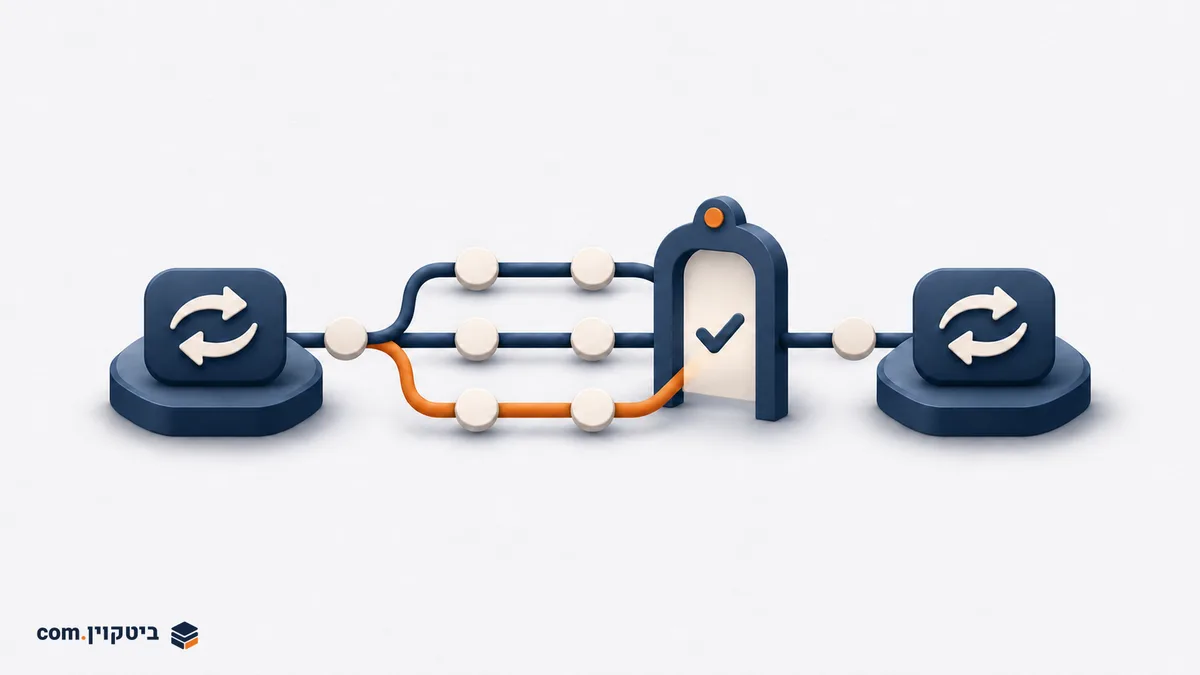
LCX's documentation distinguishes a swap that starts and ends on one network from a transaction that includes a bridge to another. A cross-chain route can have several stages: a swap before the bridge, a bridge transfer and sometimes another swap on arrival. A token's name alone therefore does not describe the operation.
The 1.8.0 release notes list ether, USDT and WBTC as assets carried on routes to and from ZKsync. They also identify a limitation: USDC.e, the bridged dollar-token version on that network, is not carried by the bridges in those routes. A route targeting a dollar asset may therefore include a swap after arrival. This describes the service's documented routes, not every bridge available elsewhere.
LCX's execution documentation also says that a cross-chain transfer is not one atomic operation from beginning to end. Confirmation on the source network does not establish that the asset has reached its destination. Tracking the transfer's status is part of the process; arrival cannot be inferred from a confirmation mark in the sending wallet.
A zero platform fee still leaves costs to compare
The company's announcement advertises a 0% platform fee while explicitly retaining network gas and pool fees. A useful comparison therefore starts with the expected amount received after costs, alongside the minimum amount displayed for the route, rather than the headline for one category of fee.
A price can move between quotation and execution. Slippage tolerance is the boundary the user permits for that change. Widening it is not a neutral way to resolve a failed trade, because it changes the terms being accepted. The announcement provides no basis for promising a fixed saving to a reader in Israel or a superior outcome on every trade.
The wallet still signs, and the user still checks
LCX says its SDK never sees a private key and does not sign. It returns transaction data for a wallet to sign. That separates preparation from authorization, but does not remove the need to understand permissions granted to contracts. As the guide to crypto wallet custody explains, an interface and control of assets are different things.
For someone assessing the addition, the sequence remains straightforward: identify the source and destination networks, verify the asset and receiving address, read the route and costs, then examine the requested permission or signature. The new support expands infrastructure access to ZKsync. It is not a recommendation to trade a particular token, a blanket security certification or a promise that an initiated transfer will finish without delay.